
Dialectical Praxis
Education | Scholarship | Organizing
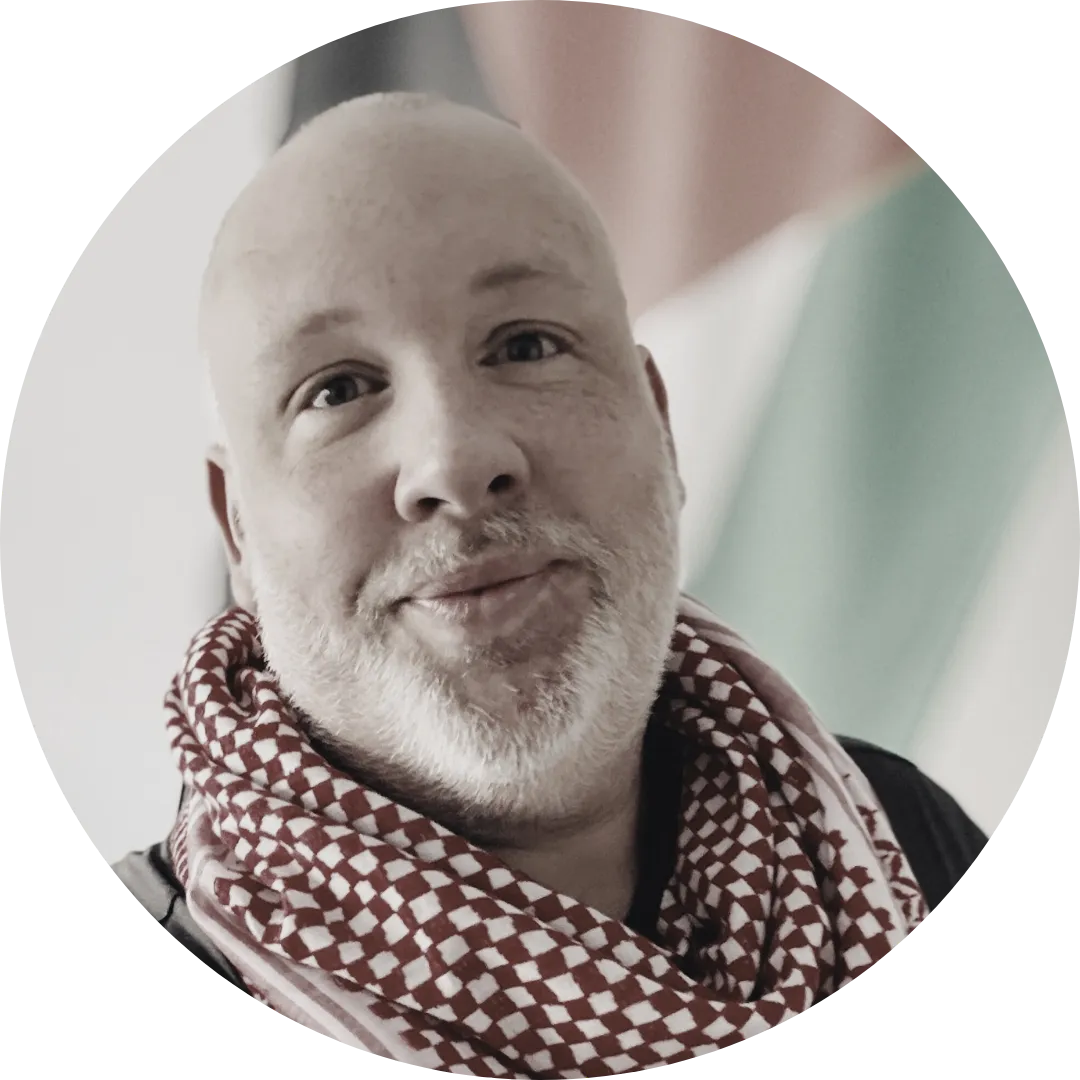
Hello and welcome! My name is Derron. I'm an educator, scholar, and organizer who cares deeply about humans and our collective liberation.
Hailing from Ohio, my interests and career have carried me across the Atlantic to Western Europe, all the way to the Intermountain West and the Great Basin, to Upstate New York, and to the rolling Flint Hills of Kansas.
My educational background is in languages and linguistics, the scientific study of language, and in college student development. I've worked within higher education institutions for over 15 years teaching, building and supporting communities, strategically creating inclusive spaces and advocating for historically excluded populations, and designing instructional and digital learning.
As a doctoral student of adult and continuing education at Kansas State University, I study adult learning under an imperialist apparatus that governs what counts as knowledge, and I am building a materialist theory of how adults come to accept, reproduce, or break from the frames that order hands them.
When not working, studying, or doing research, you can find me volunteering and organizing, tending my plot at the community garden, reading epic fantasy fiction, crafting, playing cozy video games, and studying and discussing linguistics and language.
What is Dialectical Praxis?
Dialectical praxis is the transformative process by which individuals and groups come to understand and change the world through reflective, critical, and embodied action. It is rooted in Marxist dialectics, enriched by Freirean conscientização, deepened through adult learning, and oriented toward liberation.
Dialectical (adj.): a way of thinking, reasoning, or engaging with the world that emphasizes contradiction, change, and the dynamic interplay of opposing forces. It is rooted in dialectics, a philosophical method most prominently developed by Georg Wilhelm Friedrich Hegel and reworked on materialist ground by Karl Marx.
Praxis (noun): the process of putting theory into action in a deliberate, reflective, and socially meaningful way. Praxis is the fusion of reflection and action into a single movement.
Education
My teaching is grounded in dialectical praxis, the unity of critical reflection and material action. Education is never neutral. The classroom sits inside the same apparatus that conditions what counts as knowledge, and teaching either reproduces that order or works to transform it. I treat learning as the working through of real contradictions in students' material conditions, developing both the consciousness that grasps the relations beneath appearances and the collective capacity to act on them. My practice draws on Paulo Freire, Myles Horton, bell hooks, and Frantz Fanon, and on the longer tradition of movement-based political education in which study is bound to organization. Feminist, decolonial, Marxist, and critical race theories inform this work, held together by a materialist commitment to changing the conditions that produce oppression rather than only the ideas that justify it.
I'm currently developing an open source model for community political education and adult learning, called The People's Free School.
Scholarship
My research examines how a hegemonic order uses material conditions to govern what counts as legitimate knowledge, and how adults come to break from it. I work at the intersection of social epistemology and adult learning, and I treat the so-called post-truth crisis as structural and hegemonic rather than a failure of individual rationality. Adults who reject expert consensus are commonly cast as irrational or cognitively deficient. I show instead that their epistemic orientations are frequently rational within the material conditions, media infrastructures, and political projects that shape the environments in which they learn.
The organizing question of my work is what leads a person to break with the common sense they were handed and act against the grain of the order that formed them. I build this account from dialectical materialism, Gramsci's theory of hegemony, and Freire's praxis, and I hold two claims together. The material apparatus of knowledge production manufactures consent through the institutions of civil society, from schooling to media. Those same material conditions generate the contradictions through which consent breaks: subordinated social position, embodied and lived experience, and relationships across difference. Rupture, on this account, is itself materially conditioned. Domination is therefore never total, and counter-hegemonic learning remains possible.
My scholarship is committed to explaining both halves of this movement, how consent is produced and how people come to refuse it, and to identifying the material and collective conditions under which the refusal takes hold.
Organizing
My organizing treats theory and practice as a single movement. Collective action builds the material counter-power through which a dominant order is contested, and study bound to organization is how a movement develops the consciousness to wield it. I center the leadership of those most impacted by systemic oppression, building coalitions across struggles for racial justice, economic equity, housing, and climate.
Through direct action Opens in a new tab , political education Opens in a new tab , and grassroots organizing Opens in a new tab , I work to create spaces where people develop critical consciousness, practice democratic participation, and exercise power together. This is where my research and my practice meet. The reflection anchored in material conditions and joined to action that I study as a theory of adult learning is the same work that political education does inside a movement. My organizing draws on abolitionist frameworks, Indigenous sovereignty movements, and traditions of radical organizing across the Global South.